
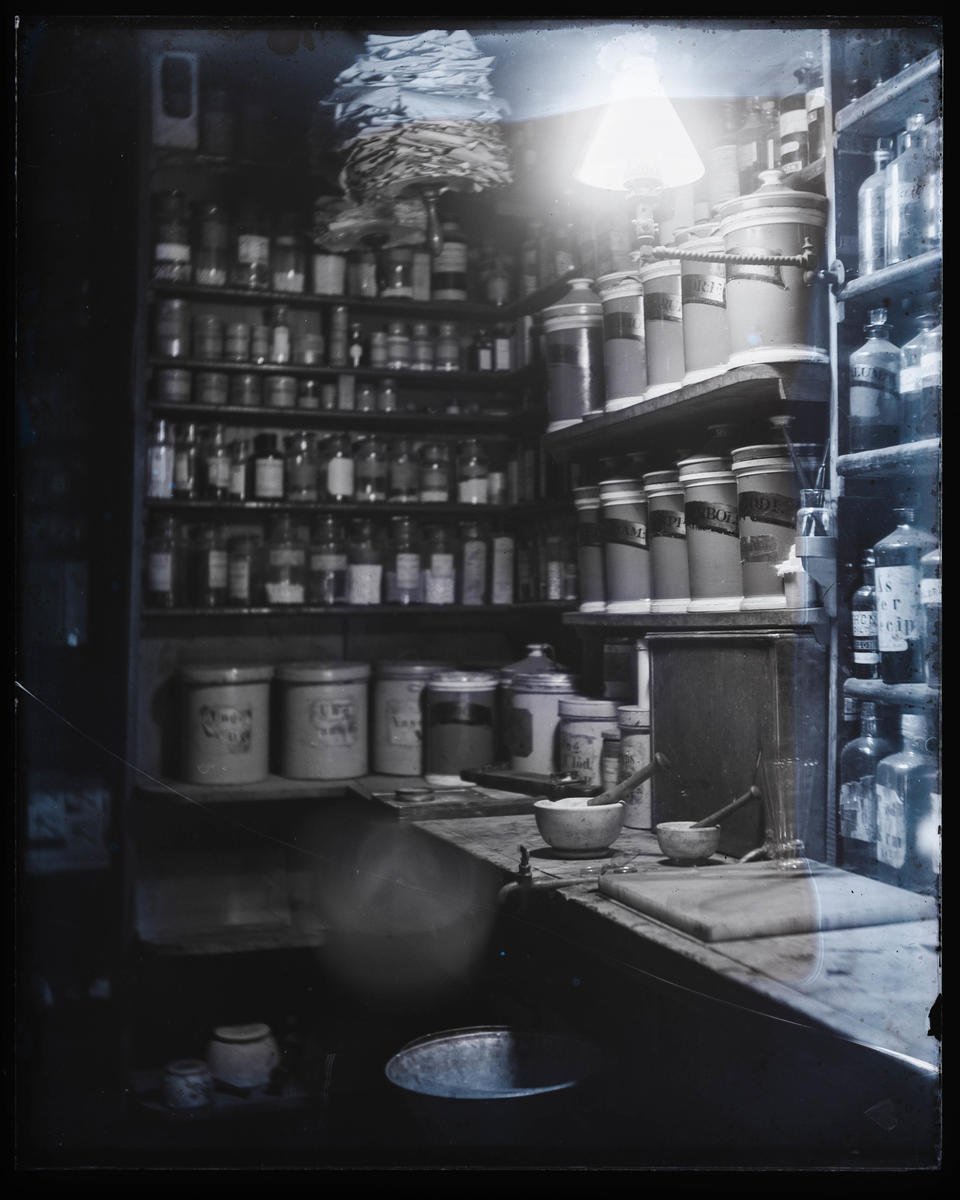
A chemist’s shop in Christchurch, 1866 – possibly Bonnington’s. This gives us an idea of what Arthur's workspace may have looked like. Source: Canterbury Museum.
The pharmacy: a one-stop-shop to pick up your prescription, post a letter, and maybe even buy a last-minute gift for that special someone! The concept might seem a little ad hoc, but there is a historical method to this madness.
Much like today, healthcare and seeing a doctor during the 19th century could be expensive and hard to access. One way of bridging that gap was through chemists and druggists, who provided medicines and other health-related products to the public (Rice 2022: 13).
But that wasn't all they did, as we shall soon realise as we uncover the life of Arthur Bayfield.
Arthur was born in 1820 in England to Thomas and Harriett Bayfield. Thomas was a shopkeeper with his own successful drapery business in Halesworth, Suffolk, where Arthur later worked during his teenage years (Suffolk Chronicle 07/10/1837: 1). Chances are this is where Arthur developed his savvy business skills, while also realising his ambitions of becoming a chemist.
On Valentine’s Day 1849 Arthur married his sweetheart, Matilda. There is some mystery surrounding how Arthur began his career, nevertheless an English business directory from 1850 shows us he had a store on Earsham Street in his hometown of Bungay (Hunt & Co's 1850). During that same year, Arthur and Matilda welcomed their first of many children.
Shortly afterwards, however, Arthur sold his chemist store - it seems that Arthur and his young family had a chance to start a new life in a faraway land. The Bayfield’s travelled for 99 days by ship before they finally landed in Lyttelton in December of 1850. They were part of the Canterbury Association’s colonial settlement plan for the area.
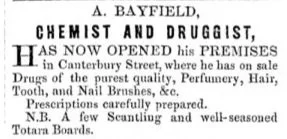
Arthur's first ad. Lyttelton Times 15/02/1851: 1.
Arthur had brought enough medical supplies with him to start the region’s first pharmacy on Canterbury Street in Lyttelton and after just 3 months his store was open to the public (Anderson 2020). Initially customers could purchase drugs, prescriptions, and a few luxuries one might typically see in a pharmacy.
However, tucked amongst all of that was something rather unexpected: excess totara timber. It seems Arthur was embracing the one-stop-shop idea from the very beginning! Eventually building materials became a regular feature of Arthur's trade, as Lyttelton's population grew and settlers needed housing supplies (Lyttelton Times 31/05/1851: 4; 23/07/1853: 11).
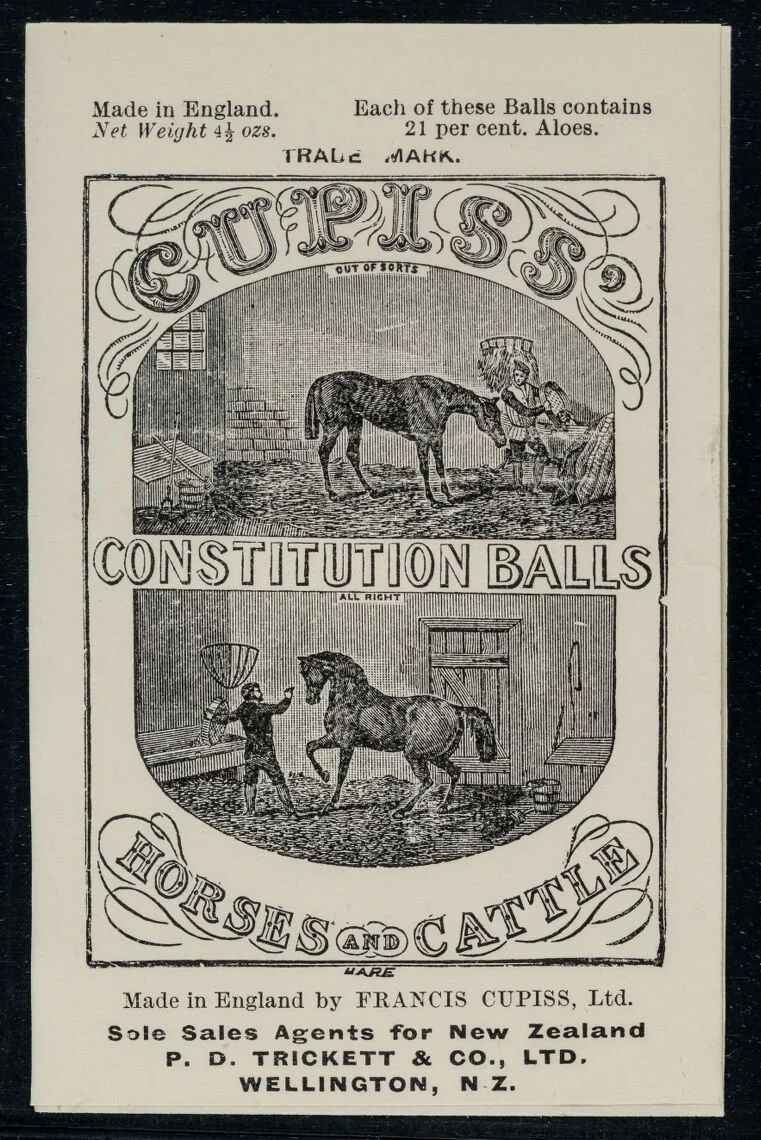
'Cupiss's Constitution Balls' to sort out your sad horse. Source: Wellcome Collection.
Arthur’s pharmacy wasn’t just for humans, he also catered to farmers by stocking medicines for farm animals. It was common for druggists in the 18th and 19th centuries to combine their human services with animal care (Marland, 1987: 424). And with the boom of farming in Canterbury, it was only natural for a sharp businessman like Arthur to start stocking these products on his shelves.
As the population rapidly grew, Arthur opened a second branch in Christchurch on High Street (known then as Sumner or Ferry Road) in 1853. The pharmacy served yet another purpose, as the post office, which was to operate from his store in January 1854. In those days mail travelled very slowly between Christchurch and Lyttelton three times a week – a far cry from today’s instant messages and emails (Lyttelton Times 24/12/1853: 6). For settlers, Arthur’s shop became not only a place to purchase remedies when they were feeling sick, but it was also a point of connection with the wider colonial world.
There was, however, a darker side to being a 19th century chemist. Arthur also sold substances that we would absolutely think twice about handling today.
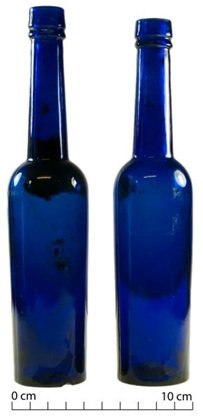
Castor oil commonly used as a laxative. Source: Museum of Archaeology Ōtautahi.
An 1853 ad shows the sale of arsenic, corrosive sublimate and strychnine for sheep farmers (Lyttelton Times 29/10/1853: 10). Arsenic could be found everywhere in the 19th century, from decorative wallpaper and house paints, to pesticides, and even in dye used for clothing - putting a new spin on the saying ‘dressed to kill!’
As the years went by, Arthur and Matilda seemed to be enjoying their business’ success and as one does in the druggist trade, Arthur begins selling “fine strong leeches” (Lyttelton Times 16/06/1858: 5). These slippery little suckers were used in bloodletting, a practice dating back to ancient Egypt (Brown 2025). Strangely enough, the use of leeches has been revived in modern medicine, and a specific type of leech used in surgeries is bred right here in Aotearoa New Zealand!
Around the same time, dentistry had become a lucrative industry where almost everybody and their dog were claiming to be “tooth-pullers,” including D. C. Anderson, a watch and clock maker from London, who made dental procedures a side hustle at his shop located at Lichfield Cottage (Lyttelton Times 01/05/1858: 7).
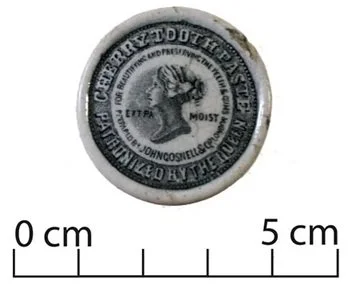
Cherry flavoured toothpaste available at the time. Extra moist! Source: Museum of Archaeology Ōtautahi.
Well, you can guess who also began extracting teeth in 1861. After partnering with Henry Watkins, a general storekeeper from Akaroa, Arthur printed a new ad letting people know he had added the extra service of tooth pulling (Rice 2020: 6; Lyttelton Times 21/09/1861: 6). Many settlers would have purchased Arthur’s tooth powders, pastes and mouthwashes in the hopes of covering up bad breath from rotting teeth (Te Ara 2011). In the early stages of dentistry there wasn’t much to be done about cavities apart from removing the afflicted tooth and hoping for the best!
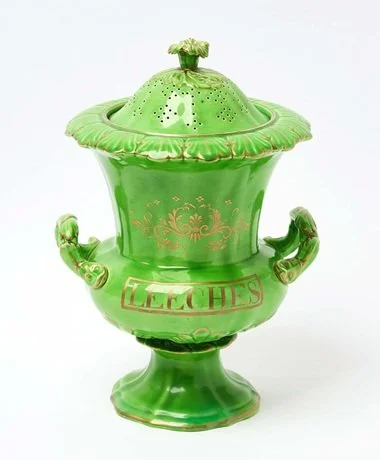
A 19th century leech jar, notice the little air holes at the top! Source: Antiques and the Arts.
Sadly, Arthur passed away in December of that year – leaving behind his wife Matilda and their 6 surviving children. Matilda carried on the Lyttelton branch of the shop until August 1862 when she sold the business to H. Lawrence who carried on the one-stop-shop tradition by selling homeopathic remedies and self-help medicine chests.
Although Arthur lived in Christchurch a short time, fragments of his life show us how truly adaptable and resourceful individuals in the pharmacy trade were. So, the next time you visit your local pharmacist and need an icebreaker, simply ask them where they keep their leeches!
Shontay Buchanan
References
Ancestry.com. (1850) 'Arthur Bayfield', UK, City and County Directories, 1766 - 1946: 1850 Hunt & Co’s Directory of E Norfolk & parts of Suffolk. Available at: https://www.ancestry.com
Anderson, Stuart. (2020) "Pharmacy and migration: James Butler Swann (1834-1901) and his three sons in New Zealand, Fiji and Samoa 1862-1936." Pharmaceutical Historian 50, no. 1: 1-15.
Brown, E. (2025), Why you should love a leech: bloodletting’s modern revival, Our Health Museum, viewed 12 October 2026, https://www.ourhealthmuseum.org.nz/short-exhibition/love-a-leech.
Lyttelton Times. Available online at: https://paperspast.natlib.govt.nz/
Marland, H. (1987), 'The medical activities of mid-nineteenth-century chemists and druggists, with special reference to Wakefield and Huddersfield', Medical History, vol. 31, no. 4, pp. 415-439.
Museum of Archaeology Ōtautahi. Available online at: https://museumofarchaeology.org/
Rice, Geoffrey W. (2020). Chemists and druggists in early Christchurch and Lyttelton, New Zealand, 1850s to 1880s. Christchurch, New Zealand: Hawthorne Press / Cotter Medical History Trust.
Rice, Geoffrey W. (2022). Death of a Doctor: Dr James Turnbull and the Hilson Inquest of 1862 in Christchurch, NZ. Available via National Library of New Zealand.
Schmidt, A. and Moffat, S. (2011) Dental care – Early dental care. Te Ara – the Encyclopedia of New Zealand. Available at: Te Ara.
Suffolk Chronicle. Available online at: https://www.britishnewspaperarchive.com/home
